

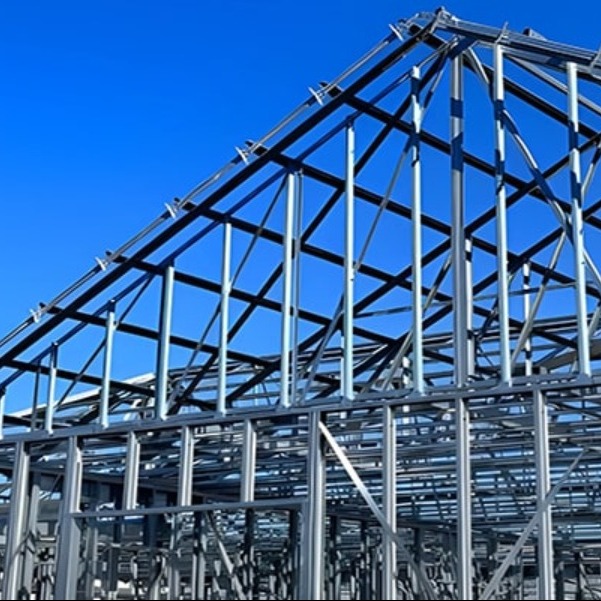
Conventional Steel Structures In Ambattur
1. Introduction
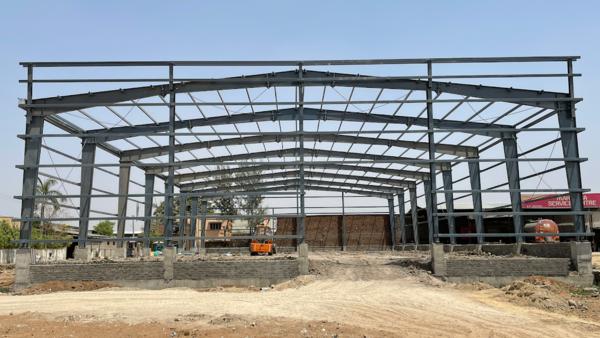
Conventional steel structures are load-bearing systems in which structural steel members such as beams, columns, and trusses are used to resist loads and transfer them safely to the foundation. These structures are widely used due to steel’s high strength, durability, and versatility.
2. Materials Used
- Structural steel sections (I-sections, channels, angles, hollow sections)
- Plates and bolts
- Welding electrodes
- Protective coatings (paint, galvanization)
3. Structural Components
- Beams: Carry bending loads
- Columns: Carry axial loads
- Bracings: Provide lateral stability
- Trusses: Used for long-span roofs
- Connections: Bolted or welded joints
- Foundations: Transfer loads to the ground
4. Design Philosophy
Conventional steel structures are designed based on:
- Elastic or limit state design
- Consideration of dead loads, live loads, wind loads, and seismic loads
- Compliance with codes and standards (e.g., IS, Eurocode, AISC)
5. Construction Method
- Fabrication of steel members in workshops
- Transportation to site
- Erection using cranes
- Bolting or welding connections
- Application of protective coatings
6. Advantages
- High strength-to-weight ratio
- Faster construction
- Long spans possible
- Uniform material properties
- Recyclable and reusable
7. Limitations
- Susceptible to corrosion if not protected
- Loss of strength at high temperatures
- Requires skilled labor
- Initial cost may be higher
8. Protection Measures
- Corrosion protection: Painting, galvanizing
- Fire protection: Fire-resistant coatings, encasement
9. Applications
- Industrial buildings
- Warehouses
- Bridges
- Multi-storey buildings
- Towers and transmission structures
10. Conclusion
Conventional steel structures play a vital role in modern construction due to their strength, efficiency, and adaptability. With proper design and maintenance, they offer long-lasting and reliable structural solutions.